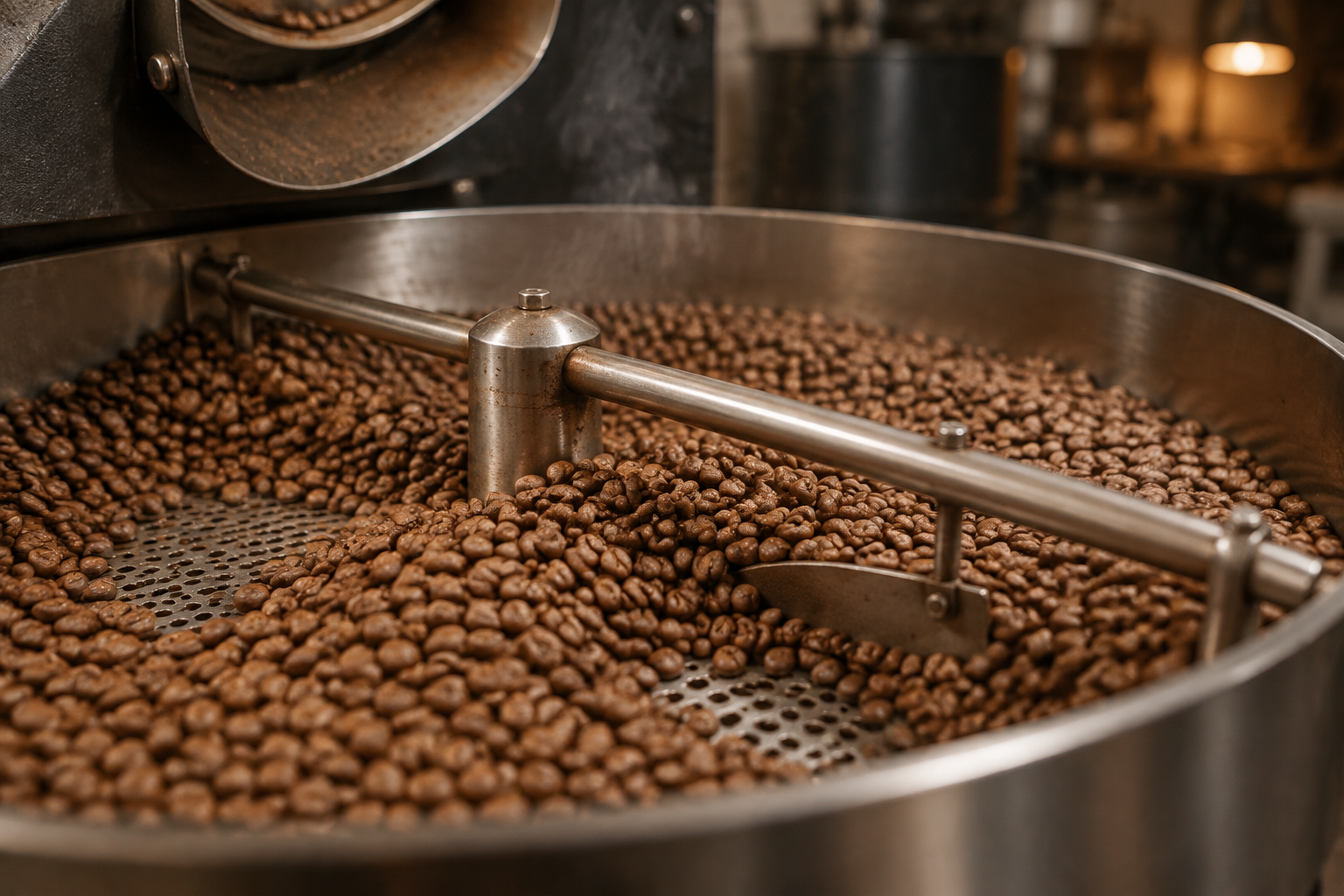
People sometimes pick up one of our bags, look at the pale beans through the little window and ask whether we forgot to finish them. It is a fair question, and the answer is the reason this café exists.
Sugar in the roaster
Torrefacto means roasting coffee with sugar, which burns onto the beans and coats them in a black glaze. It became common in Spain when coffee was scarce and cheap beans needed hiding. Most bars still use a blend of it. It tastes bitter and heavy, so you add more sugar to make it drinkable.
My father still drinks it every morning, and when he visited the shop last spring he asked for his café con leche with two sugars. He finished a cup of our Huila filter without adding any, and then pretended he had not noticed.
One morning in Melbourne
In 2017 I was washing cups at a café in Fitzroy when a colleague handed me a washed Kenyan, brewed through a paper filter. It tasted of blackcurrant. I asked what they had added to it, and they laughed. That flavour came from the farm, and the roaster had simply kept out of its way.
Heat writes over flavour
Roasting is cooking. Up to a point it builds sweetness and reveals what the coffee grew into: fruit, flowers, the sugar the cherry stored while it ripened. Past that point the roast takes over. Chocolate and smoke are lovely, but they taste much the same whether the bean came from Kenya or Brazil.
Think of toast. Lightly done, you can still taste whether the bread was sourdough or rye. Leave it under the grill longer and it all tastes of toast.
A lighter roast keeps the acidity that makes a good coffee bright, the way a ripe apple is bright. Without it, coffee tastes flat.
Light still means cooked through
A light roast still has to be cooked through. Pulled too early, coffee tastes grassy and a bit like peanut shells, and that is a fault. Maksim logs every batch: the charge temperature, the minute first crack starts, the time from crack to drop. A batch that strays more than 15 seconds from its profile goes to the staff jug and never into a bag. In our first year that was 23 batches.
Order our light filter and a Grulla espresso side by side at the bar, and tell us which one you would take home. Either answer is welcome.
Inés, behind the bar
6 comments